
How an Automatic Standby Generator Works During an Outage
A homeowner-friendly explanation of standby generators, transfer switches and backup circuits.
A homeowner guide from Wellington Generator Pros.
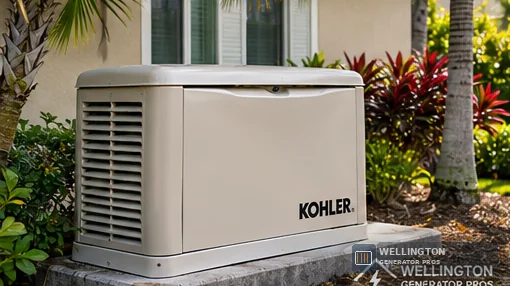
A residential automatic standby generator is installed outside the home and connected to the electrical system through a transfer switch. When utility power is lost, the system detects the interruption and, after its programmed sequence, starts the generator and transfers the selected electrical loads to backup power.
The transfer switch is a key safety component. It helps prevent the home's generator from sending power back into utility lines and manages the connection between utility power and generator power. The switch must be selected and installed to suit the generator, service equipment and intended backed-up loads.
When utility service returns and stabilizes, the transfer equipment moves the home back to utility power. The generator then follows its cool-down and shutdown sequence according to the equipment settings.
Important considerations
A homeowner-friendly explanation of standby generators, transfer switches and backup circuits. A careful review of the home's site conditions and equipment documentation can help avoid assumptions that lead to a poor fit or unexpected changes later in the project.
Questions to ask before choosing a system
Ask the contractor how the project will be evaluated, what work is included, which permits or inspections apply, and how the equipment will be tested and maintained. Request a written scope that identifies the selected equipment, installation responsibilities, exclusions, warranty details and next steps.
Local planning in Wellington and Palm Beach County
Properties in Wellington and nearby communities may be subject to different local rules and permitting processes. Confirm the jurisdiction using the exact property address rather than assuming that all nearby mailing addresses follow the same process. Review applicable homeowners association requirements before choosing a generator location.
Talk through your project
Every home and generator installation is different. Call Wellington Generator Pros at (561) 423-4462 to discuss your property, the service you need and whether the local service provider can assist. Equipment selection, pricing, service availability and scheduling should be confirmed directly.
More planning details
What the homeowner may notice
During an outage, the generator does not necessarily energize every circuit in the home. The transfer switch connects only the loads supported by the selected configuration. If a system includes load management, some larger appliances may be sequenced or temporarily restricted so the generator stays within its operating capacity. This is one reason homeowners should understand which circuits are backed up before an outage occurs.
Testing and familiarization
After installation, the contractor should explain the normal operating sequence, exercise schedule, indicator lights and any monitoring features supplied with the system. Ask how to recognize an alert and where to find the model-specific troubleshooting information. Do not assume that every display message has the same meaning across different generator brands or models. Follow the owner's manual and contact a qualified service provider when a fault needs diagnosis.
Safe operation matters
A permanently installed generator must be installed outdoors in a location that complies with the manufacturer's instructions and applicable codes. Never operate a portable generator indoors, in a garage or near openings where exhaust can enter a building. Do not modify the transfer equipment or attempt to connect a generator directly to a household outlet. Properly installed transfer equipment helps prevent dangerous backfeed.
Call (561) 423-4462 to discuss your project.