
What to Expect During a Professional Generator Installation
The typical planning stages from home assessment through commissioning and owner orientation.
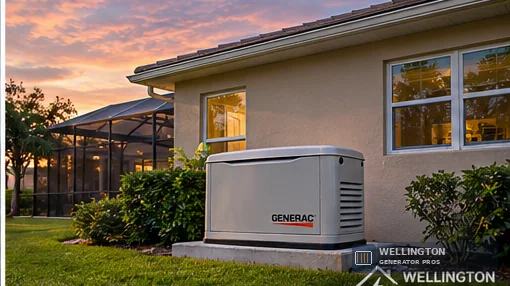
A homeowner guide from Wellington Generator Pros.
A professional standby generator installation begins with a discussion about the home's backup power goals. The homeowner should identify which appliances and circuits matter most, whether the goal is essential-circuit backup or broader whole-home coverage, and any special electrical needs.
Next comes a site assessment. The contractor reviews the electrical service, proposed generator location, fuel source, access, ventilation clearances, drainage and any property restrictions. Equipment is selected based on calculated loads and the manufacturer's requirements.
Permitting and installation planning follow. Depending on the property and scope, applications may include building, electrical and fuel-related approvals. Work may involve preparing a base, placing the generator, connecting fuel and electrical systems, installing transfer equipment and coordinating inspections.
Important considerations
The typical planning stages from home assessment through commissioning and owner orientation. A careful review of the home's site conditions and equipment documentation can help avoid assumptions that lead to a poor fit or unexpected changes later in the project.
Questions to ask before choosing a system
Ask the contractor how the project will be evaluated, what work is included, which permits or inspections apply, and how the equipment will be tested and maintained. Request a written scope that identifies the selected equipment, installation responsibilities, exclusions, warranty details and next steps.
Local planning in Wellington and Palm Beach County
Properties in Wellington and nearby communities may be subject to different local rules and permitting processes. Confirm the jurisdiction using the exact property address rather than assuming that all nearby mailing addresses follow the same process. Review applicable homeowners association requirements before choosing a generator location.
Talk through your project
Every home and generator installation is different. Call Wellington Generator Pros at (561) 423-4462 to discuss your property, the service you need and whether the local service provider can assist. Equipment selection, pricing, service availability and scheduling should be confirmed directly.
More planning details
Assessment and proposal
A project commonly begins with a conversation about the home's priorities and a site visit. The contractor reviews the electrical panel, expected loads, fuel source, possible equipment location and access. The proposal should identify the generator and transfer equipment, describe the work included, list exclusions and explain the permit responsibilities. Ask for clarification before accepting an estimate if the scope is unclear.
Permits and construction
After the plan is agreed, applications and supporting documents are prepared for the relevant authority. Once approvals and scheduling are in place, installation may involve preparing the base, setting the generator, completing electrical and fuel connections and installing transfer equipment. The exact sequence depends on the property, local review process and work required.
Startup and owner orientation
Before relying on the system, confirm that required inspections and startup checks have been completed. Ask the installer to demonstrate normal operation, the exercise cycle, monitoring features and basic owner responsibilities. Keep the final paperwork, manuals, warranty information and service contact details. A clear handover helps the homeowner understand what to expect when utility power is interrupted.
Call (561) 423-4462 to discuss your project.